
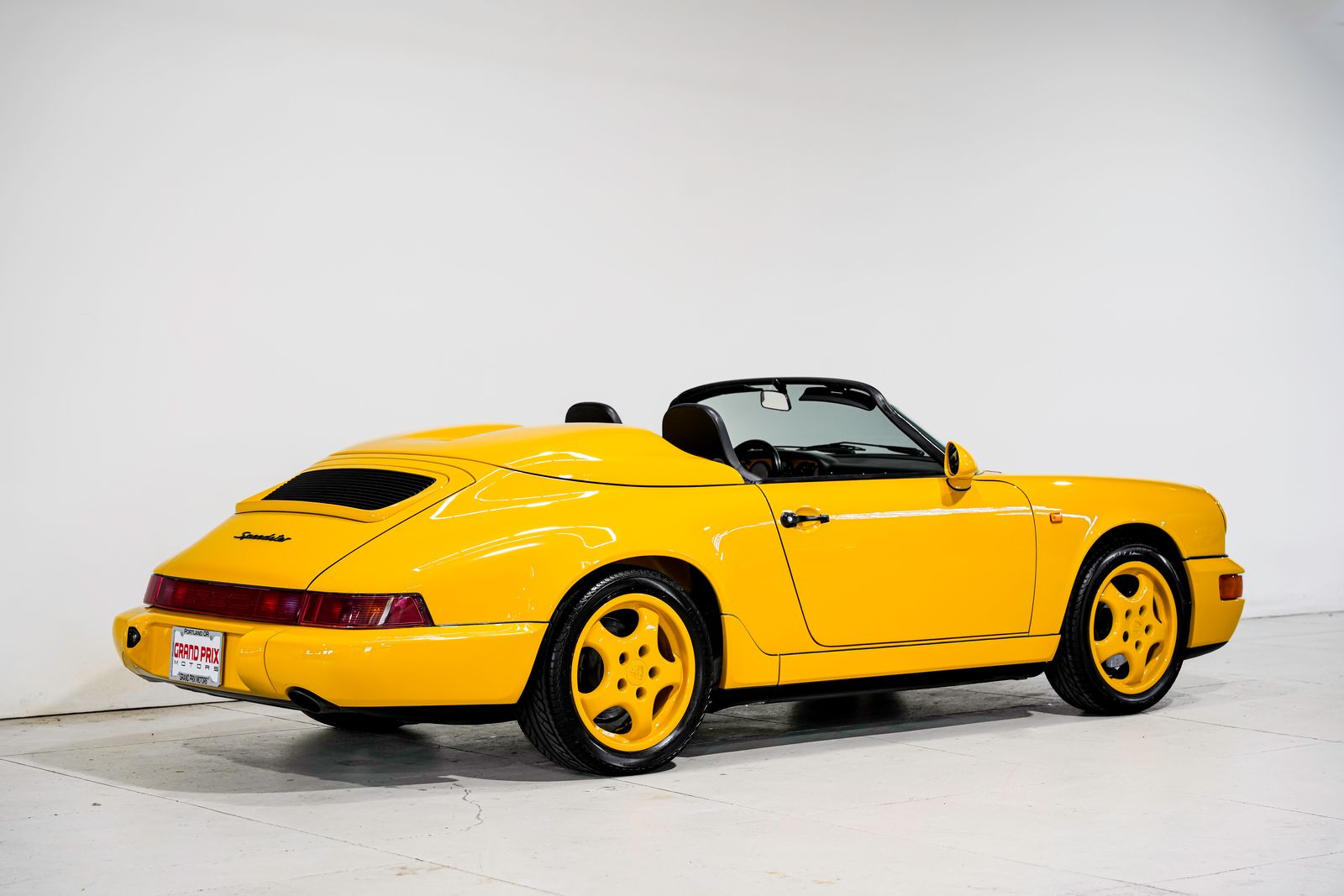
964 vs 993: Choosing Your Air-Cooled 911
The 964 and the 993 are the last two air-cooled 911s Porsche ever built. Both are appreciating. Both offer something no modern Porsche can replicate. And enthusiasts have been arguing about which one to buy for thirty years. Here is what actually separates them.
The 964: the classic silhouette, modernised
Produced from 1989 to 1994, the 964 was Porsche’s first serious modernisation of the 911 — the company claimed roughly 85 percent of the car was new. It kept the upright headlights and the classic proportions, but underneath, almost everything changed.
Coil springsreplaced the torsion bars that had defined every 911 before it. Power steering arrived. So did ABS, and — for the first time on a 911 — the option of all-wheel drive in the Carrera 4. The 3.6-litre air-cooled flat-six produced 250 bhp.
The result is a car that looks vintage and drives more usable than anything that came before it. For many buyers, that combination is the entire appeal: more analog and raw than the 993, but far more civilised than the earlier G-series cars. It’s the in-between 911.
The 993: the last one, and the most refined
Built from 1994 to 1998, the 993 is the final air-cooled 911. It was less a revolution than an intelligent correction — Porsche addressed the 964’s weak points rather than starting over.
The bodywork, penned by Tony Hatter, is widely considered the most beautiful the 911 has ever worn: flush headlights, rounded bumpers, a wider rear stance. But the significant engineering change is underneath. The 993 was the first 911 with multi-link rear suspension, and it transformed the car’s high-speed stability. It also gained a six-speed gearbox, where the 964 had five.
From 1996, Porsche introduced the VarioRamintake system, which added power and — more usefully — meaningful mid-range torque. Later VarioRam cars are the ones most buyers chase, though early non-VarioRam examples appeal to purists who prefer the simpler setup.
How they drive
Both communicate in a way modern 911s cannot. Hydraulic steering with real weight and genuine feedback. Immediate, linear throttle. A chassis that responds to weight transfer because the car is light and the suspension geometry is simple. No stability programs, no traction control, no driver aids beyond the grip of the tyres.
Where they differ is in temperament. The 964 feels rawer and more mechanical— the older character with the rough edges left in. The 993 smoothed those edges without losing the essential 911 nature. Better sound insulation, a more considered interior, and a chassis that stays composed at speed. If you already own a modern Porsche and want to experience classic air-cooled character without the compromises, the 993 is generally the easier car to live with — and the better long-distance companion.
What to watch for
Both generations share the fundamental air-cooled flat-six architecture, and therefore share several concerns.
Oil leaks are common on both. On early 964 engines, Porsche did without cylinder gaskets, and oil can seep from the joint between barrel and crankcase. A gasket was added from 1991, which improved the problem without always eliminating it. Both cars use a dry-sump system with a separate oil tank, and the lines between tank and engine are another common leak point. On 993s, oil typically seeps around the cam covers, which are plastic and lose their oil-tightness with age.
The dual-mass flywheel.Introduced on the 964 to smooth drivetrain vibration, it fails with mileage — the symptom is rattling and vibration at low engine speeds. Replacement is a known, significant expense on higher-mileage cars.
964-specific: power steering leaks at the rack, lines, and pump are a recurring issue.
993-specific:the M64 engines — both pre-VarioRam and VarioRam — are remarkably reliable, and specialists routinely see 150,000-mile examples in good mechanical health provided they’ve had regular attention. Problems tend to be age-related rather than design-related. Some shells have shown awkward rust points, so inspect carefully.
Both: exhaust valve guide wear is a known air-cooled issue. Chain tensioners need monitoring.
One 964-specific warning: be careful with “backdated” cars built to look like earlier 911s. However well executed, consider whether the car can be returned to standard specification — as 911s age, the market increasingly values originality.
The collector picture
The 993 has always commanded a premium as the last air-cooled 911, and that premium continues to grow. The 964, meanwhile, spent years in the shadow — and then came from behind. Values that once trailed the 993 caught up and, in some cases, overtook, driven partly by the “Singer effect” as restomod builders bought up 964 shells.
Both are appreciating. Neither is being made again.
Specs at a glance
- 964 (1989–1994)
- Air-cooled 3.6L flat-six · 250 bhp · 5-speed · coil-spring rear · upright headlights · first 911 with power steering, ABS, optional AWD
- 993 (1994–1998)
- Air-cooled 3.6L flat-six · 6-speed · multi-link rear suspension(first 911) · flush headlights · VarioRam intake from 1996
What to check before you buy a used 964 or 993
Oil leaks
Barrel/crankcase seep on early 964 (no cylinder gaskets before 1991); cam-cover seep on 993. Inspect the tank-to-engine lines on both.
Dual-mass flywheel
Rattling or vibration at low revs signals failure. Replacement is a known, significant expense on higher-mileage cars.
964 power steering
Leaks at the rack, lines, and pump are a recurring 964 issue.
Valve guides and chain tensioners
Exhaust valve guide wear is a known air-cooled issue on both generations. Chain tensioner condition needs monitoring.
993 shell inspection
Some shells have shown awkward rust points. A thorough inspection of body seams, sills, and battery tray area is essential.
Backdated 964s
However well executed, confirm the car can be returned to standard specification. Originality is increasingly valued as these cars age.
Pre-purchase inspection
At these levels, a thorough PPI by an air-cooled Porsche-focused shop is non-negotiable.
Which one
There is no wrong answer here, and anyone who tells you otherwise is selling something.
If you want the classic upright-headlight silhouette, a rawer mechanical feel, and the sense that you’re driving the last car that looks like the original 911 — the 964 is calling.
If you want the most refined, most composed, most complete expression of the air-cooled 911 — the one Porsche built after it had learned everything — the 993 is where it ends.
The advice that matters more than either choice: buy the best example you can afford. Condition and documentation matter far more than variant in the long run. A pristine, well-documented 964 is a better buy than a rough 993 at the same money. At these levels, a thorough pre-purchase inspection by an air-cooled shop isn’t optional.
Buy the one that makes you want to take the long way home.
FAQ
Which is the last air-cooled Porsche 911?
The 993, produced from 1994 to 1998. It is the final generation of the air-cooled 911, and that status has driven a lasting collector premium.
What is the biggest engineering difference between the 964 and 993?
The rear suspension. The 993 was the first 911 with multi-link rear suspension, which transformed high-speed stability. The 993 also has a six-speed gearbox where the 964 has five.
What is VarioRam?
A variable intake system Porsche introduced on the 993 from 1996. It added power and, more usefully, meaningful mid-range torque. Later VarioRam cars are the ones most buyers seek.
Is the 964 or the 993 more reliable?
Both share the air-cooled flat-six architecture and its known issues — oil leaks, dual-mass flywheel wear, valve guide wear. The 993's M64 engines are considered remarkably durable, with well-maintained examples running well past 150,000 miles. Condition and service history matter far more than generation.
Which one holds value better?
The 993 has long commanded a premium as the last air-cooled 911. The 964 spent years behind it, then caught up sharply — partly driven by restomod builders buying 964 shells. Both are appreciating, and neither is being made again.
Grand Prix Motorcars hand-picks air-cooled 911s and delivers nationwide. Buy the best example you can afford — condition and documentation matter far more than variant.
Related guides

Shipping a Porsche 911 Across the Country: What to Expect
Buying a car you have not seen in person is the easy part. Getting it to your driveway in the same condition it left the lot is where most of the questions come in. Here is what actually happens between sold and delivered.
Read the guide →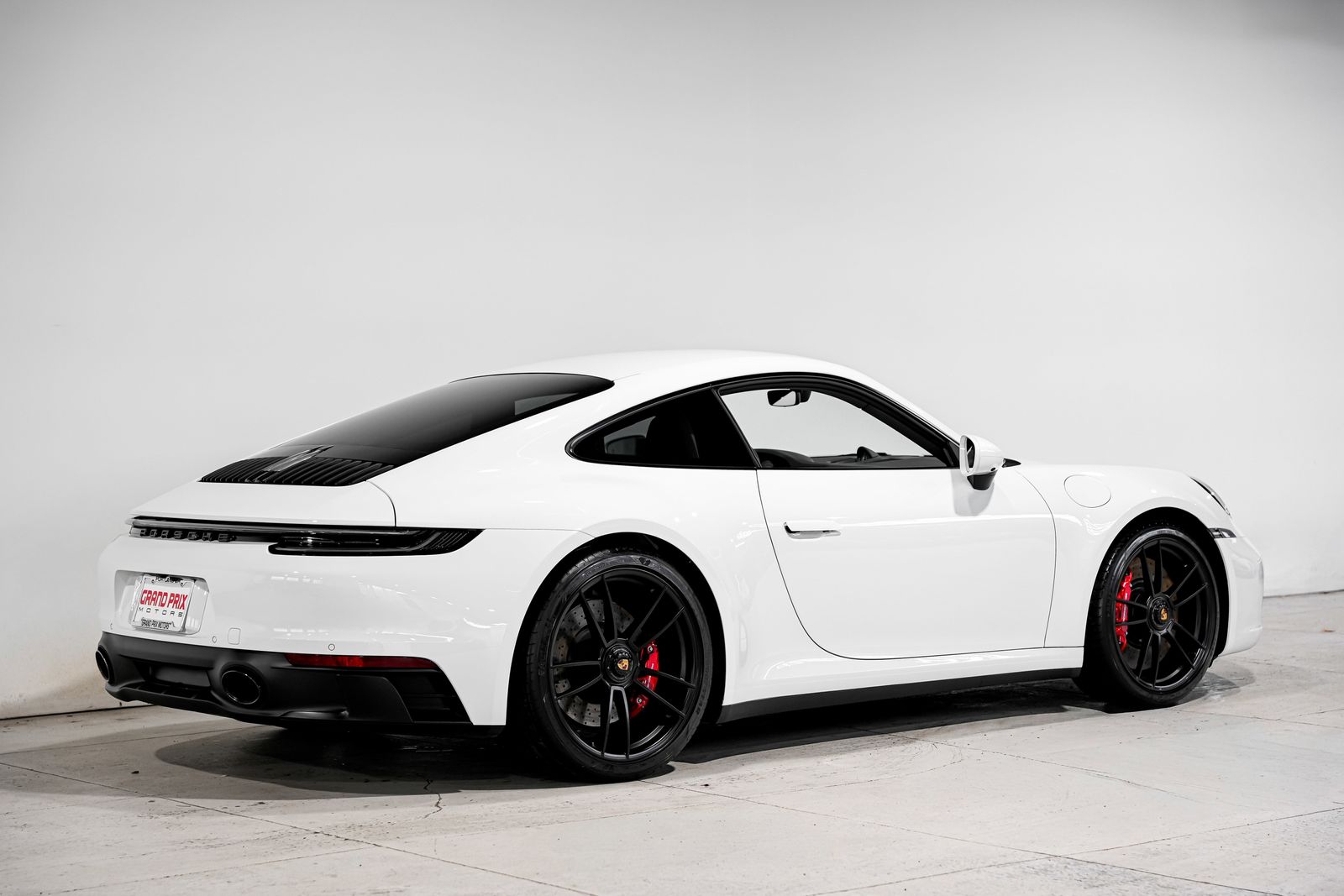
992 vs 991: What Actually Changed Between Porsche 911 Generations
Wider, quicker, more digital — and a different car underneath. Timeline, engines, transmission, interior, handling, reliability, and the PPI checklist for a used 991 or 992.
Read the guide →