
Porsche 911 997.2 Buyer's Guide: DFI Carreras and Mezger Turbo/GT
The 997.2 is the 911 Porsche built in response to the questions raised about the first-half 997. New engine family, no IMS bearing to worry about, the introduction of PDK — and, on the Turbo and GT cars, a holdover Mezger engine that changed how buyers think about the generation. Here’s what a used 997.2 actually is and what to check before you buy.
What is the Porsche 997.2?
The 997.2is the second-half of Porsche’s 997-generation 911, produced for US model years 2009–2012 for the Carrera line and continuing through 2011 for the 911 Speedster. It replaced the 997.1 and preceded the all-new 991 platform that arrived for MY2012.
Two things define the 997.2 more than any styling detail. First: a brand-new engine family in the Carreras — the 9A1 flat-six with direct fuel injection, which eliminated the intermediate-shaft (IMS) bearing that had become the defining conversation around 996 and 997.1 M96/M97 engines. Second: the introduction of the PDK dual-clutch gearbox in place of Tiptronic on most trims. Every 997.2 Carrera is, by engineering, a materially different car underneath from a 997.1 Carrera even where the bodywork looks nearly identical.
Quick facts
- Generation
- 997.2 (facelift)
- US model years
- 2009–2012 (Carrera line)
- Base engine
- 3.6L direct-injection flat-six (Carrera)
- S engine
- 3.8L direct-injection flat-six (Carrera S)
- Transmissions
- 6-speed manual or 7-speed PDK dual-clutch
- IMS bearing
- Eliminated (9A1 architecture)
- Turbo / GT engine
- Mezger 3.6 / 3.8L flat-six (separate family)
- Successor
- 991 (MY2012+)
The 9A1 direct-injection engine
The 9A1 was a clean-sheet flat-six family Porsche introduced with the 997.2. It uses direct fuel injectioninstead of port injection, and it does not use an intermediate shaft — so the well-known IMS-bearing failure mode of the earlier M96/M97 engines simply does not apply.
Practical effect on the used market: 997.2 Carreras and Carrera Ss are usually the entry point buyers pick when they want a modern-feel 911 with a hydraulic-steering, air-conditioned analog cabin, without the IMS conversation. Documented service history still matters — every 911 does — but the failure profile is materially different from a comparable 997.1.
The Mezger legacy — Turbo, GT3, GT2 RS, Speedster
A specific detail every 997.2 shopper should know: on the Turbo, Turbo S, GT3, GT3 RS, GT2 RS, and 911 Speedster, Porsche retained the earlier Mezgerflat-six architecture rather than moving to the new 9A1. The Mezger engine is a separate family — conceptually descended from the racing 911s of the 1990s — and it is one of the reasons those 997.2 trims command a distinct premium in the collector market.
Practically, this means the 997.2 lineup is two markets in one. The DFI 9A1 Carreras are usable, reliable, modern-feel 911s. The Mezger cars are collectible on their engine as much as their trim. If you’re shopping a Turbo, Turbo S, GT3, GT3 RS, GT2 RS, or Speedster, know which engine is in front of you — and expect the market to reflect it.
Trim landscape
- Carrera / Carrera S— the DFI 9A1 volume cars, Coupe and Cabriolet.
- Carrera 4 / Carrera 4S— all-wheel drive on the wide body. Wide-body proportions matter more to some buyers than the drivetrain itself.
- Targa 4 / Targa 4S— sliding-glass roof (predates the 991’s roll-hoop Targa design).
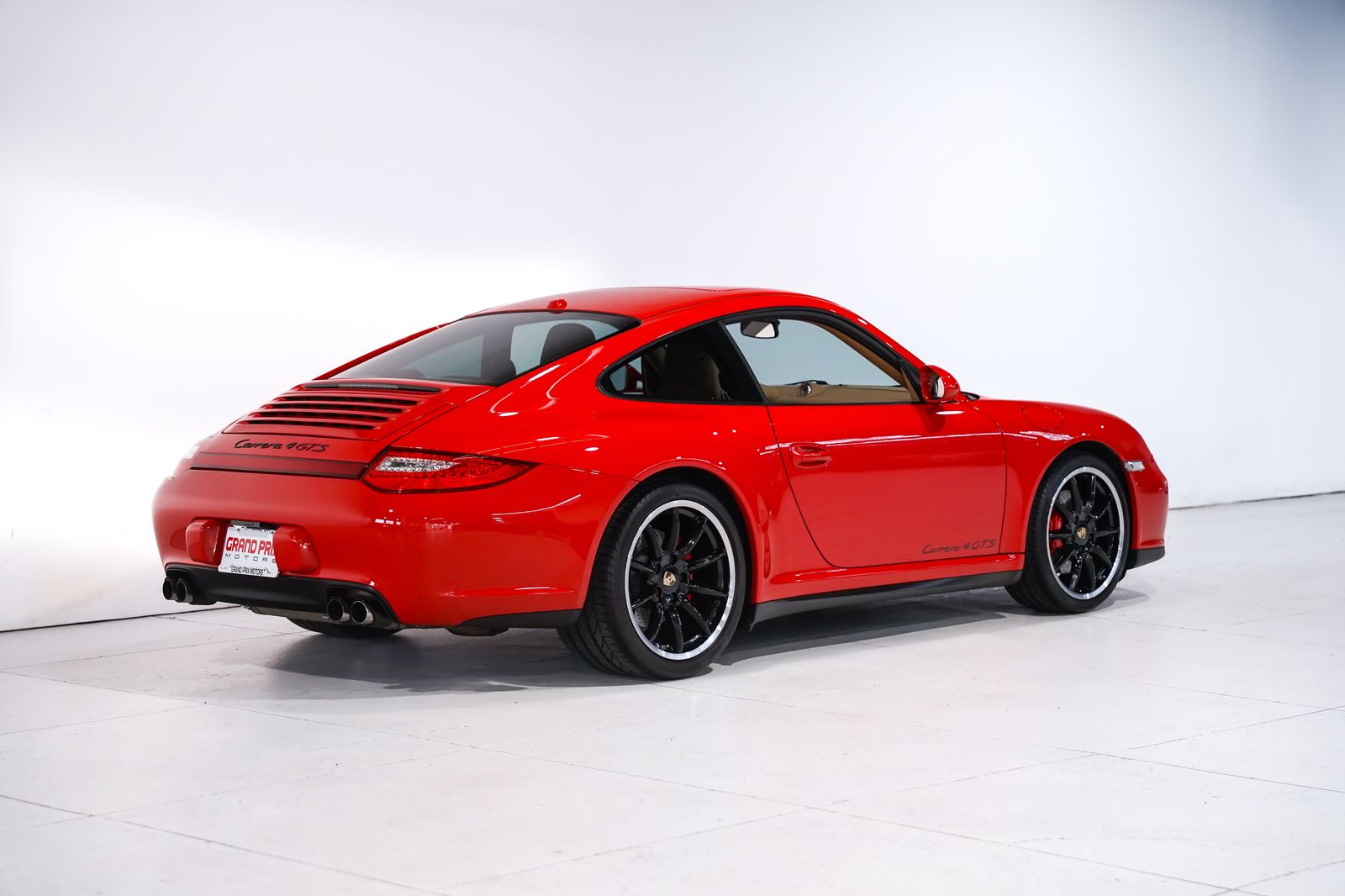
- Carrera 4 GTS— end-of-run trim on the wide-body, PASM adaptive dampers, Sport Chrono, and the Powerkit engine standard. An example of what a well-optioned GTS looks like.
- Turbo / Turbo S— Mezger 3.8, PDK from 2010, all-wheel drive.
- GT3 / GT3 RS / GT2 RS— Mezger flat-six, rear-wheel drive, manual-only for the GT3/GT3 RS.
- 911 Speedster— low-production Mezger Speedster for MY2011, rear-wheel drive, PDK.
What drivers and collectors value
Mezger-engined 997.2 cars — Turbo, Turbo S, GT3, GT3 RS, GT2 RS, Speedster — form a distinct collector segment. Among the DFI Carreras, the six-speed manual is the enthusiast pick; PDK cars are more common in the market. Sport Chrono, PASM adaptive dampers, sport exhaust, and PCCB ceramic brakes are the options that recur on cars enthusiasts choose to keep.
The GTStrims — introduced late in the 997.2 run — package the desirable options together and share a Powerkit-tuned 3.8. They’ve settled into a well-liked corner of the 997.2 market.
PPI checklist by engine
The 9A1 DFI Carreras and the Mezger Turbo/GT cars are different engineering families — the PPI focus differs accordingly.
9A1 DFI Carrera / Carrera S / Targa / GTS:
- Bore-scope on higher-mileage cars— bore-scoring risk is materially lower than on the 997.1 M96/M97, but a leak-down and borescope are still standard PPI on any 911 approaching six-figure miles.
- Coil packs and injectors— wear items on direct-injection engines with time and miles behind them.
- Coolant system— check condition and service history, especially on cars that have sat between owners.
- PDK software history on dual-clutch cars.
Mezger Turbo / GT3 / GT3 RS / GT2 RS / Speedster:
- Coolant pipes— the well-known Mezger service item on Turbo-family cars; confirm records or check whether the fix has been performed.
- RSS boltson earlier examples — a documented service concern worth confirming in the records.
- Documented service history at a specialist shop is the strongest signal on any Mezger car.
We welcome an independent PPI on every car we sell. Our default is to make the car available to whichever inspector you choose, at your expense — that’s the single most useful step for a remote buyer.
Buying a 997.2 from Grand Prix Motorcars
Grand Prix Motorcars is an independent, Porsche-focused dealer in Portland, Oregon. We hand-pick 997-generation 911s across Carrera, GTS, Turbo, GT3, and Speedster variants, and deliver nationwide, enclosed or open transport, from our showroom.
For remote buyers, a live video walk-around with a specialist — FaceTime, WhatsApp, or Zoom — is the standard we use instead of an in-person test drive. Custom photos of specific areas, and PPI coordination with your chosen shop, are available on request. Browse our current 997.2 inventory, or return to the full 997 generation hub for cars from both halves of the platform.
FAQ
What years is the Porsche 997.2?
US model years 2009 through 2012 for the Carrera line, continuing through 2011 for the 911 Speedster. It preceded the all-new 991 platform, which arrived for MY2012.
Does the 997.2 have the IMS bearing issue?
No. The 997.2 Carrera line uses the 9A1 direct-injection flat-six, which has no intermediate shaft. The IMS-bearing failure mode of the earlier M96/M97 engines does not apply to the 9A1.
Is the 997.2 Turbo the same engine as the Carrera?
No. The Carreras use the DFI 9A1 flat-six. The 997.2 Turbo, Turbo S, GT3, GT3 RS, GT2 RS, and 911 Speedster retain the earlier Mezger flat-six architecture as a separate engine family.
When did PDK arrive on the 911?
PDK dual-clutch arrived with the 997.2 for the 2009 model year, replacing Tiptronic on most trims. GT3 and GT3 RS retained a manual gearbox.
What should a PPI focus on for a Mezger Turbo?
The well-known coolant-pipe service item on Mezger Turbo cars, RSS bolts on earlier examples, and documented service history at a specialist shop.
Grand Prix Motorcars hand-picks 997-generation 911s across Carrera, GTS, Turbo, GT3, and Speedster variants and delivers nationwide.
Related guides

Shipping a Porsche 911 Across the Country: What to Expect
Buying a car you have not seen in person is the easy part. Getting it to your driveway in the same condition it left the lot is where most of the questions come in. Here is what actually happens between sold and delivered.
Read the guide →
964 vs 993: Choosing Your Air-Cooled 911
The last two air-cooled 911s. The 964 modernised the classic silhouette; the 993 finished the story with multi-link rear suspension and VarioRam. Engineering, driving character, and the PPI checklist for either.
Read the guide →